The summit in the World Heritage record
UNESCO describes the Path of Moses, or Sikket Sayidna Musa, with the Gate of Stephen, the Gate of the Law and remains of chapels. It identifies the summit itself as an important archaeological site containing a mosque and a chapel.
This official wording is valuable because it anchors the religious landscape in observable features. The path, ruins and buildings create a sequence that can be mapped, walked and filmed.
What stands on the peak
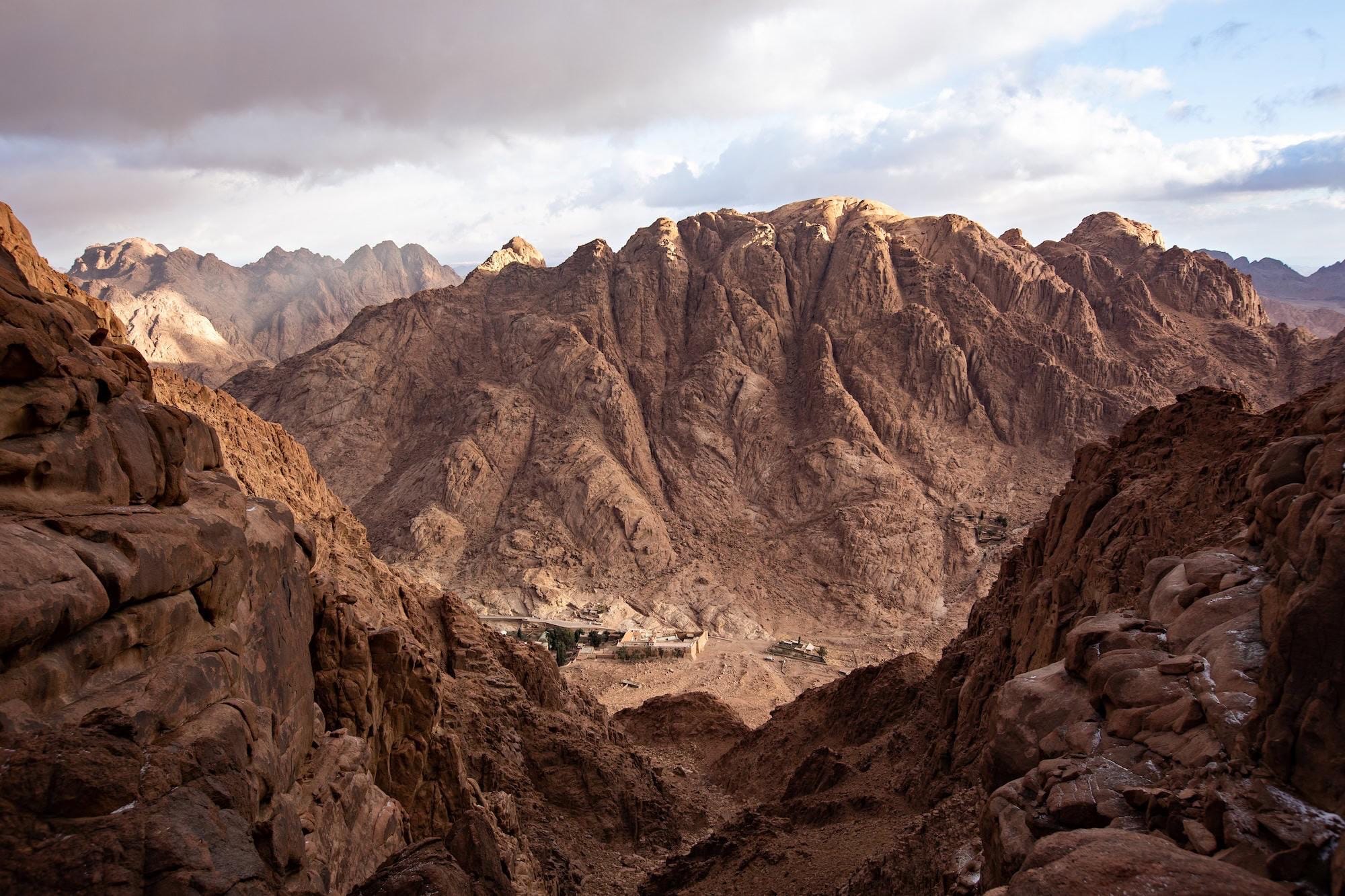
The monastery’s official account places the summit at 2,285 metres. It describes the present Chapel of the Holy Trinity at the eastern end of an earlier complex and records that it was completed in 1935 using material from older structures. Around it are remains associated with a sixth-century basilica.
The same source records a mosque within the summit complex, mentioned in descriptions from the eleventh century and built along the perimeter of the earlier basilica using stones from the church. Beneath it is a cave bearing old inscriptions.
Two historic approaches
The official monastery distinguishes the steep Steps of Repentance from the more gradual Camel Trail. The older stair route is described as approximately 3,750 steps, while the nineteenth-century trail joins it for the final ascent.
These are not simply travel details. Each route shapes the bodily experience of altitude, darkness, fatigue and sunrise—the elements that give the mountain sequences in Land of Religions their pace.
Filming a shared horizon carefully
A chapel and mosque on one summit can invite easy symbolism. The documentary begins with the documented architecture and avoids claiming that physical proximity erases theological difference.
At dawn, both structures enter the same changing light. The image offers a shared horizon; the narration preserves the distinct histories that brought each building to the peak.