The centre around which the monastery developed
The monastery’s official description says its complex developed around the traditional site of the Burning Bush and the Well of Jethro. It calls the Chapel of the Holy Bush the most ancient shrine within the monastery and places it at the eastern end of the great basilica.
The official account also records that the pilgrim Egeria mentioned the bush after visiting Sinai in 383–384. This is evidence for the antiquity of pilgrimage and tradition at the location; it is not botanical proof that a particular plant can be dated to the Biblical event.
The chapel and its practice
According to the monastery, visitors enter the chapel without shoes in reference to the command addressed to Moses. The Divine Liturgy is celebrated there on Saturdays, and the space has a distinctive arrangement without an iconostasis separating the holy table from the rest of the chapel.
These details explain why the site is more than a visual attraction. It belongs to the worship and internal life of the community, which is why filming and writing must respect the monastery’s rules and the distinction between public access and sacred use.
Tradition is not the same as laboratory evidence
Land of Religions uses language such as “traditionally associated with” when discussing the bush. That phrase does not weaken the subject. It accurately communicates the kind of knowledge being presented: a long-lived religious identification sustained by worship, pilgrimage and community memory.
The film can therefore show leaves, stone and flame imagery without claiming a scientific conclusion that its sources do not provide. This is the editorial line between reverence and misinformation.
Why the image endures
Within Christian interpretation, the monastery’s official text connects the bush that burns without being consumed with the Theotokos. More broadly, the Biblical image has become one of Sinai’s most recognisable symbols of revelation and sacred encounter.
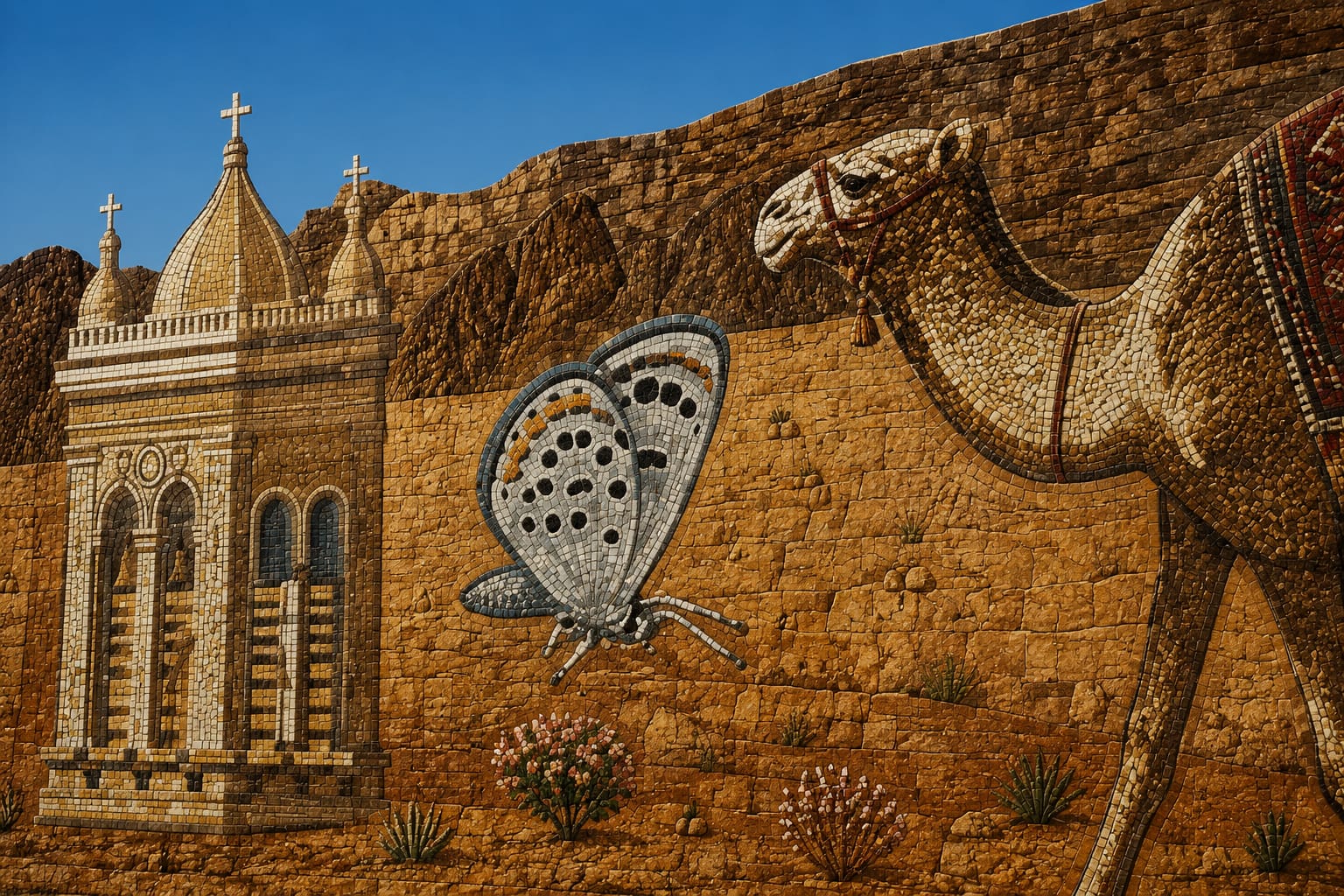
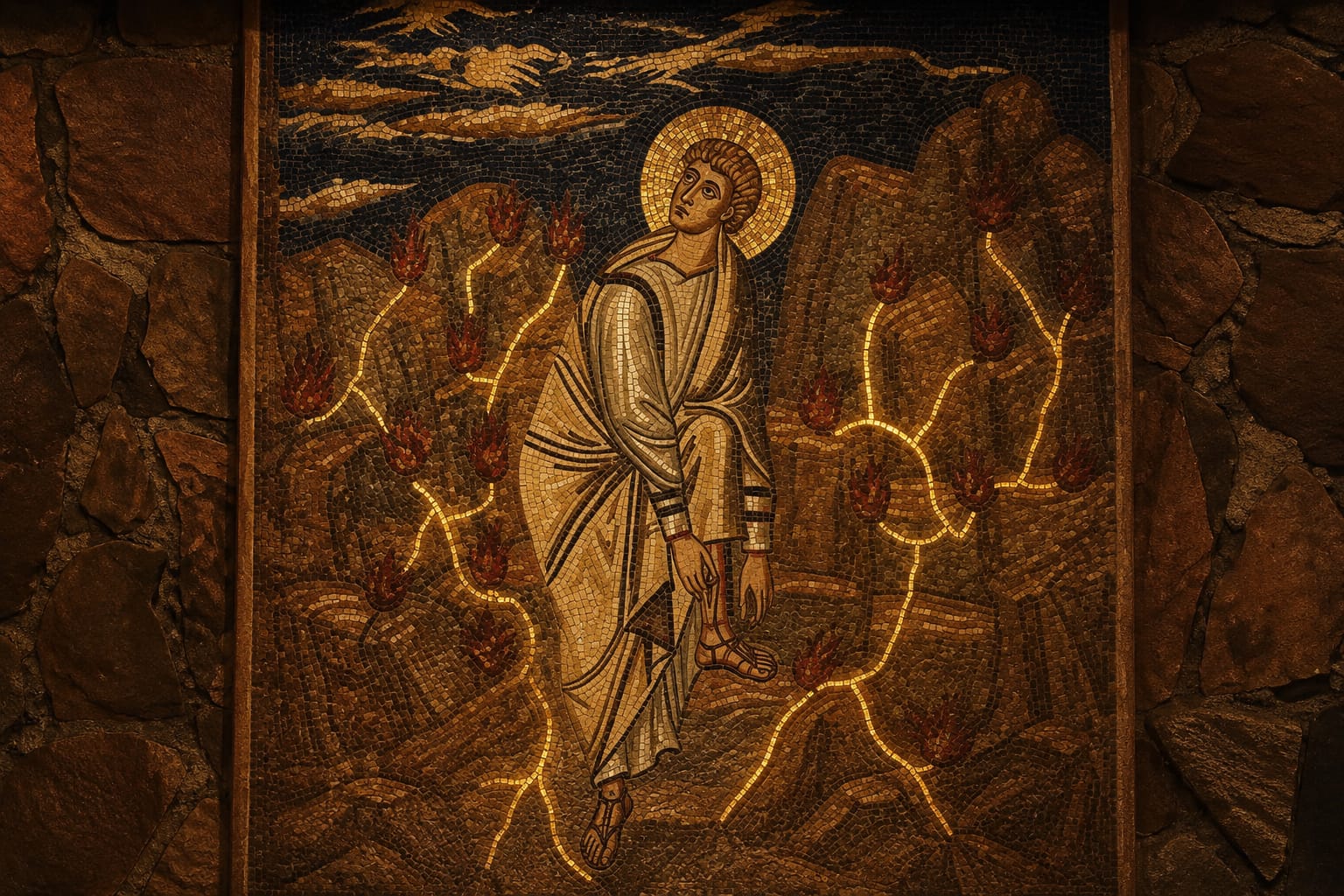
In the documentary, the bush functions on two scales: a close, living detail within the walls and a recurring visual idea for a landscape understood through memory. The supplied mosaic is labelled as contemporary editorial artwork, not as a historic piece from the monastery collection.