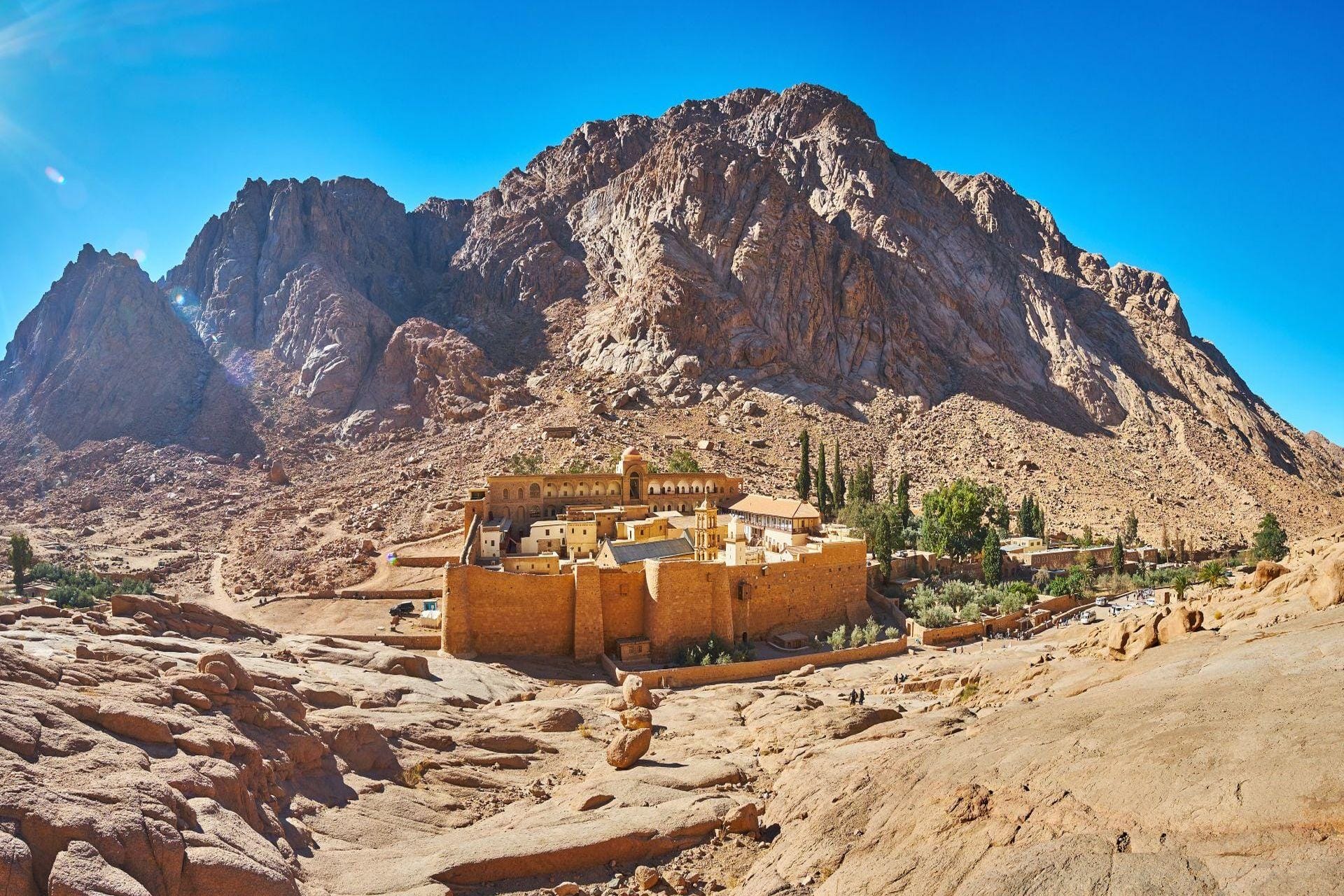
A multilingual Christian monastic collection
The monastery’s official catalogue introduction describes approximately 3,300 manuscripts, about two-thirds of them in Greek. Other principal languages include Arabic, Syriac, Georgian and Slavonic, alongside material in Polish, Hebrew, Ethiopic, Armenian, Latin and Persian.
The range matters because it records movement between communities and languages. Liturgical and theological works sit beside classical Greek texts, lexicons, medicine and travel writing, while the archive preserves letters, charters, accounts and other documents.
Codex Sinaiticus and other palimpsests
The official monastery identifies the fourth-century Codex Sinaiticus as its most famous manuscript and states that it retains twelve pages and about twenty-four fragments. It also highlights the Codex Syriacus, a palimpsest whose erased lower writing preserves an early Syriac Gospel text.
A palimpsest is parchment reused after an earlier text was removed. Modern imaging can recover traces not readable in ordinary light, making preservation a collaboration between manuscript knowledge, conservation and technology.
The Library of Congress record
The Library of Congress maintains a digital collection of manuscript microfilms and photographs produced through a mid-twentieth-century programme at Saint Catherine’s. Its public description emphasizes the collection’s Greek, Syriac, Georgian, Coptic, Armenian, Arabic, Ottoman Turkish, Ethiopic and Slavonic materials.
This record provides independent institutional evidence for the library’s international research importance. It also shows how responsible reproduction can broaden scholarly access without separating every object from its monastic context.
How the documentary films a library
The film does not treat manuscripts as treasure props. A page is meaningful because of script, language, wear, binding, use and the community that kept it. Close images of material detail are paired with the idea of a library still serving a living monastery.
Where access is limited, the website avoids implying that an editorial interior image is an exact inventory view. Captions identify what a photograph represents and source lists allow viewers to move from cinematic atmosphere to verified information.