A World Heritage landscape, not an isolated monument
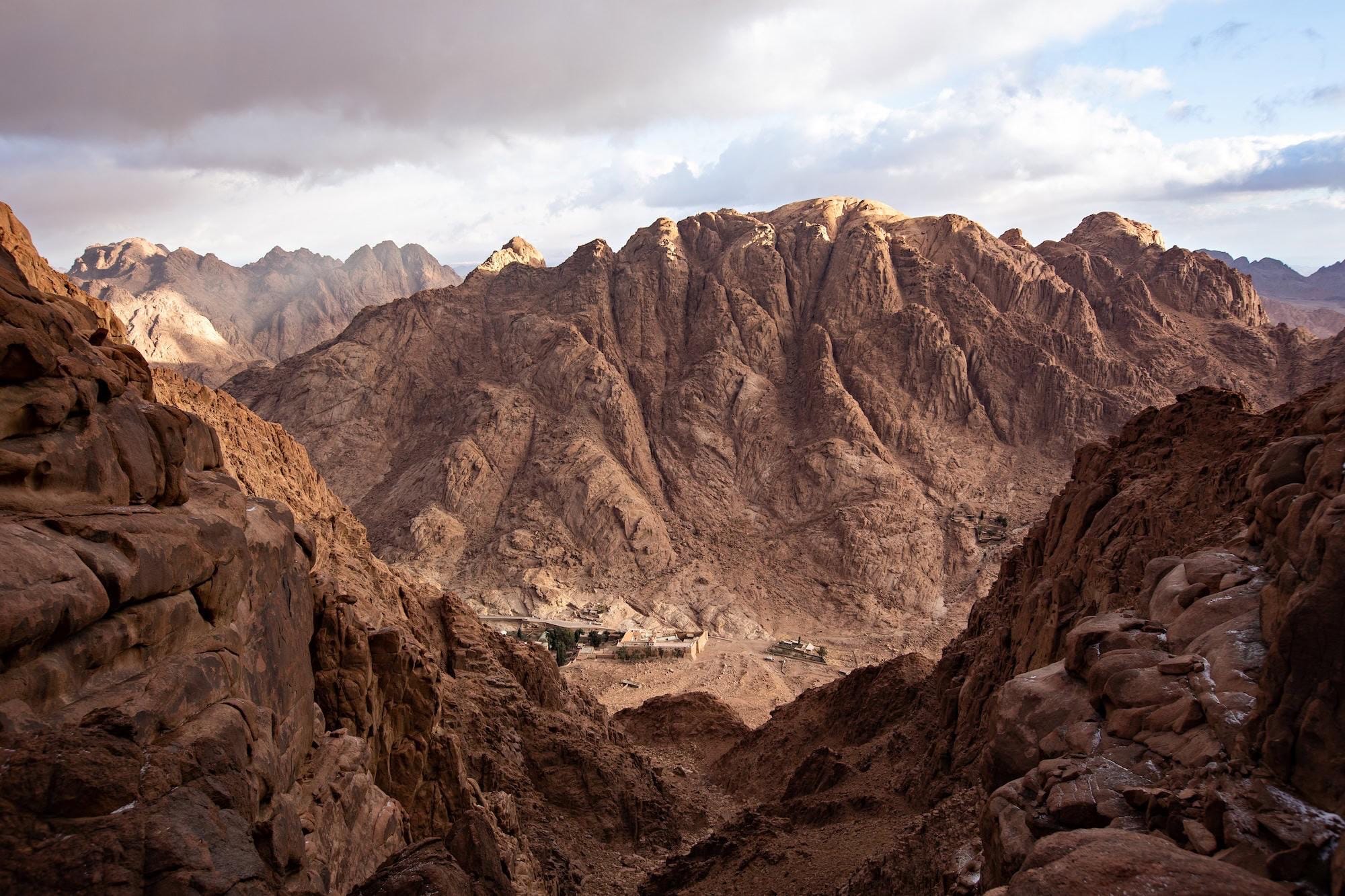
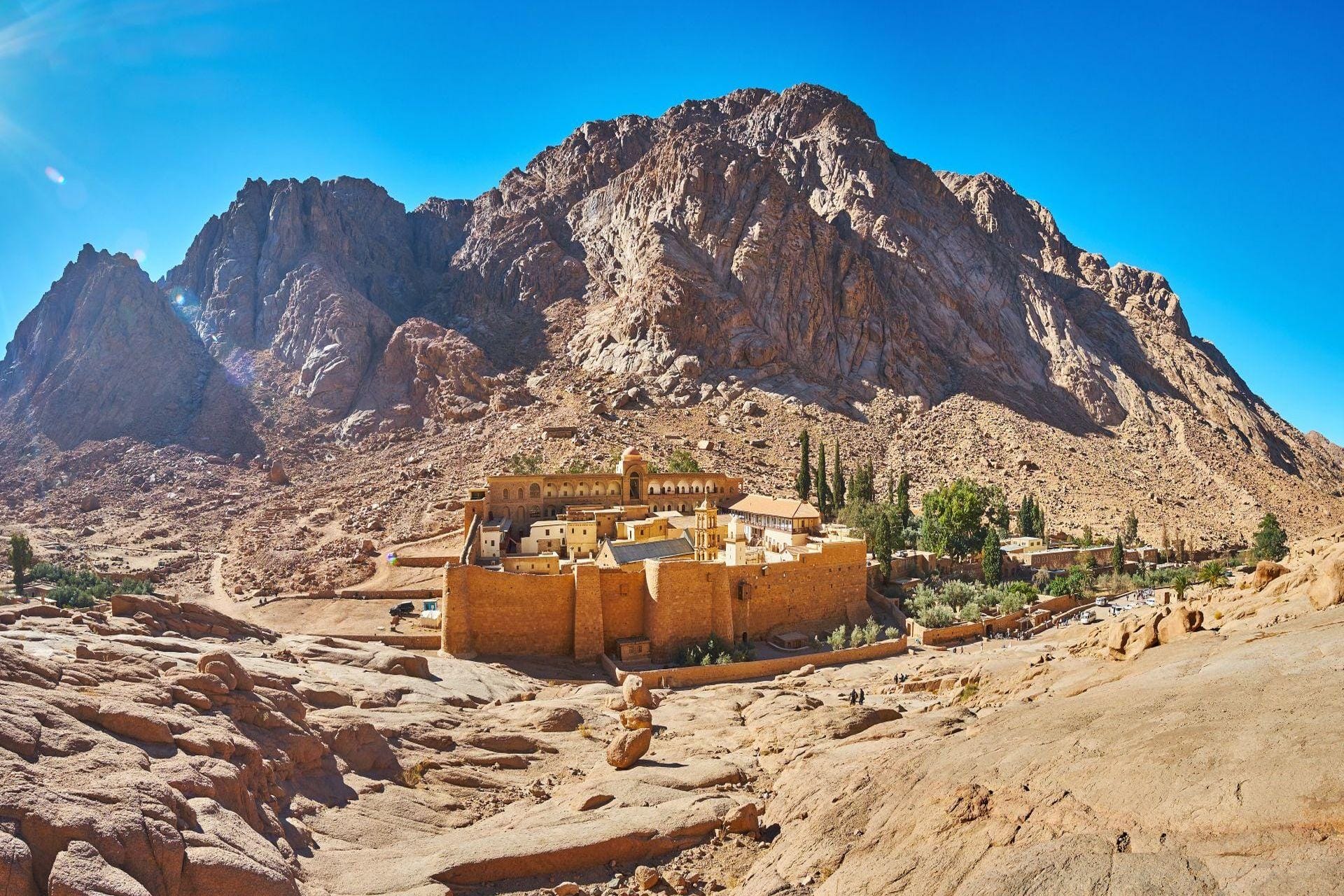
UNESCO inscribed the Saint Catherine Area on the World Heritage List in 2002. Its account centres the Orthodox monastery at the foot of Mount Horeb and describes the wider mountainous setting as part of the property’s significance. The mountain is known to Muslims as Jebel Musa, while the area carries sacred meaning in Christianity, Islam and Judaism.
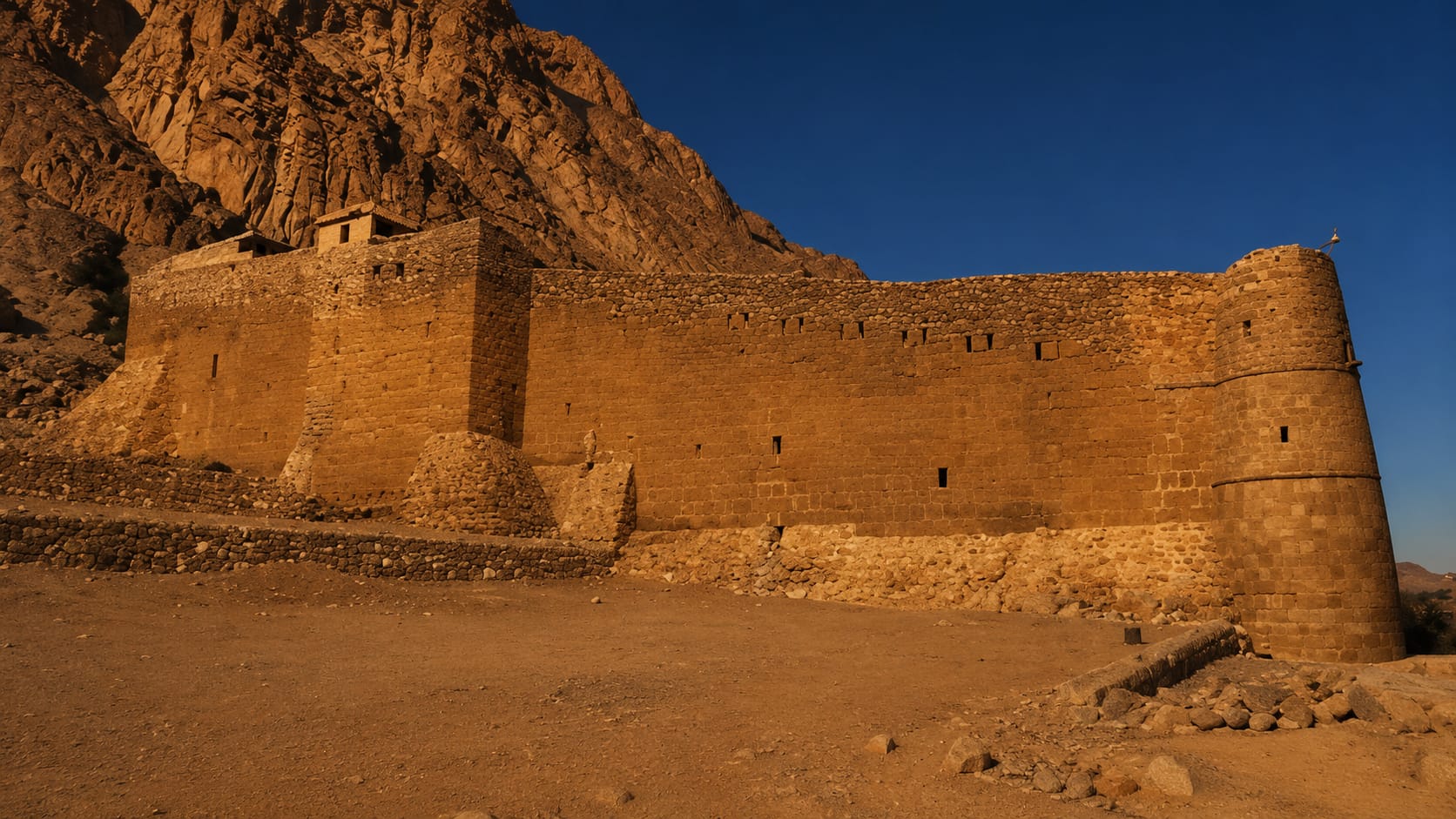
This wider frame is essential to the documentary. The camera approaches walls, valleys, paths and summits as connected parts of one cultural landscape. The monastery is therefore not used as a detached architectural image; it is presented inside the geography that has shaped pilgrimage, monastic life and local movement.
What the official record establishes
UNESCO identifies the monastery as a sixth-century foundation and the oldest Christian monastery still used for its original function. It highlights the Byzantine importance of the walls and buildings, together with outstanding collections of early Christian manuscripts and icons. Egypt’s Ministry of Tourism and Antiquities likewise describes a complex containing churches, monastic accommodation, a refectory, an olive press, ossuaries, a mosque and a library.
The Hellenic Ministry of Foreign Affairs describes Saint Catherine’s as a Greek Orthodox monastic centre dating to the sixth century and a major point of cultural and religious interest in Egypt. These official descriptions support the film’s central visual idea: continuity is visible not in one object but across architecture, worship, archives and landscape.
How the film separates evidence and tradition
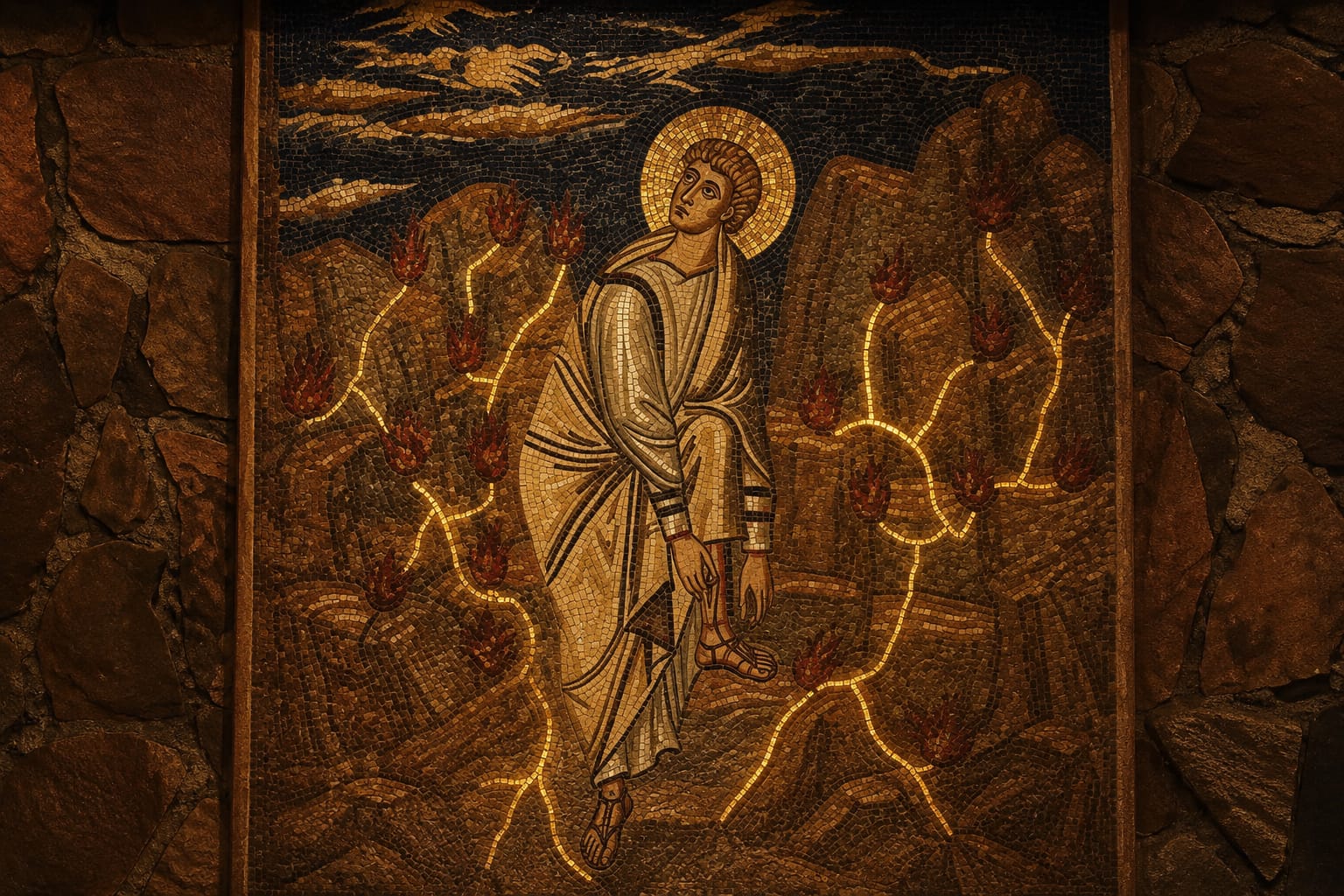
The documentary encounters places associated with Moses, the Burning Bush and Saint Catherine of Alexandria. It does not present every sacred association as an archaeological conclusion. Instead, narration and image distinguish documented dates, the monastery’s own tradition and the meanings held by different faith communities.
That distinction matters. A film about religion becomes more trustworthy when it can honour belief without turning belief into an unsupported historical claim. Land of Religions uses the mountain as a meeting place for distinct memories rather than suggesting that three religions tell an identical story.
A living institution on screen
The UNESCO record stresses uninterrupted monastic use. For the filmmakers, that continuity changes the visual language: doors, candles, books, gardens and routes are not simply remnants. They belong to a place that still has rhythms, restrictions and responsibilities.
The resulting portrait is deliberately patient. Wide frames show the scale of the granite basin; closer images attend to stone, leaves, manuscripts and light. Together they make the monastery legible as both heritage and present life—the central relationship explored by Land of Religions.