What can be seen and verified
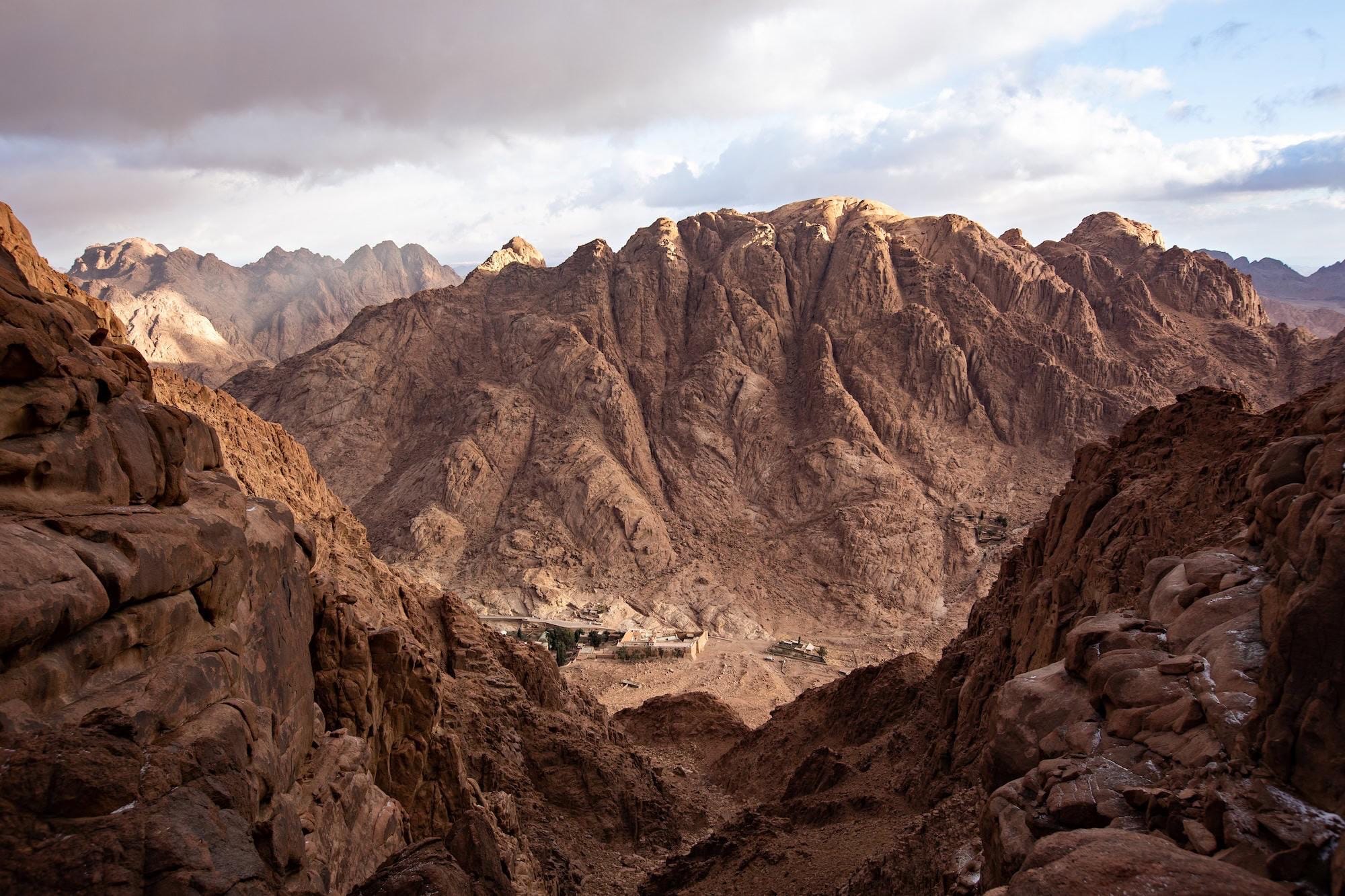
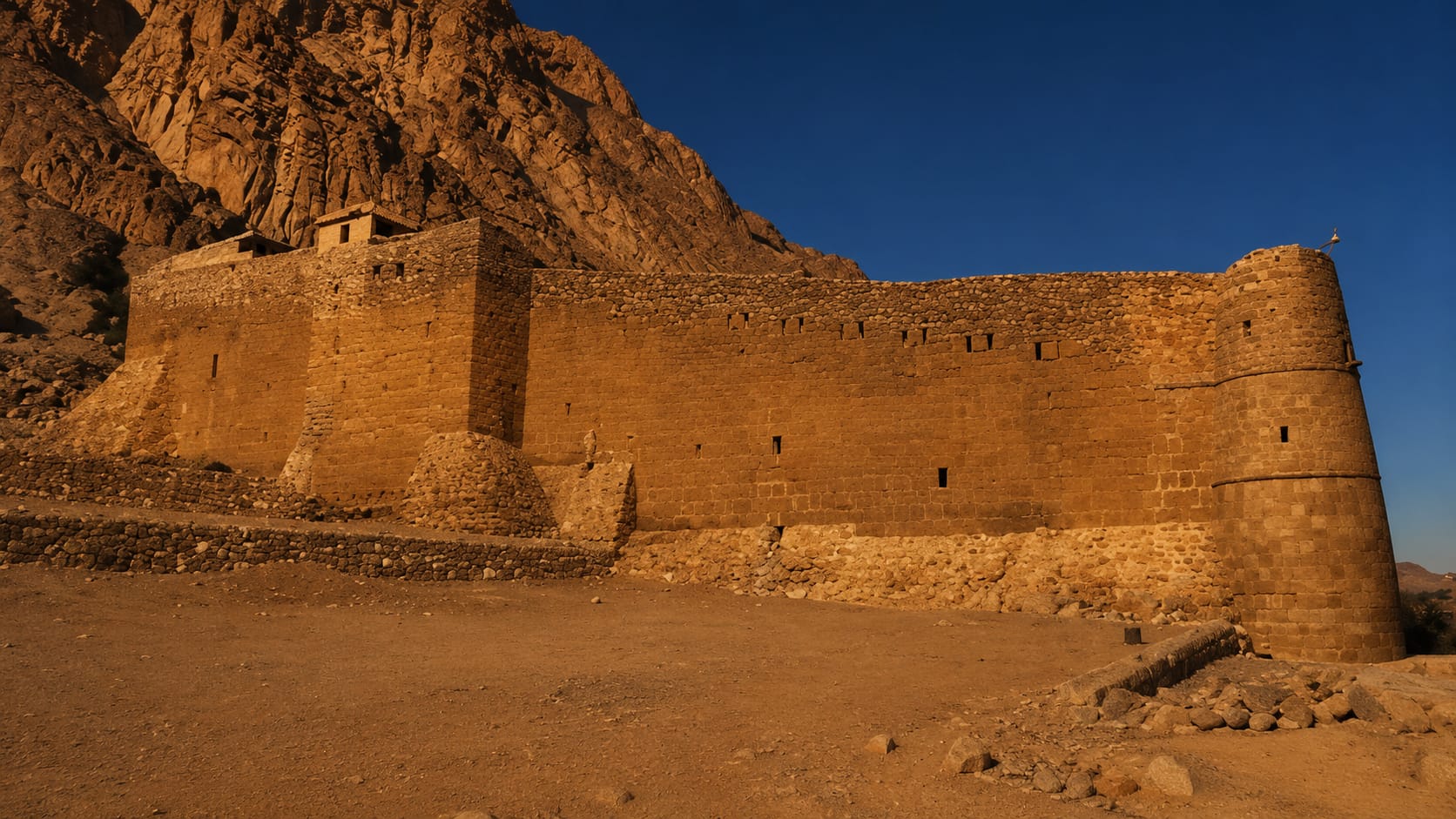
Egypt’s Ministry of Tourism and Antiquities places the mosque in the north-western part of the monastery, opposite the Church of the Transfiguration. It notes that the minaret stands beside the church bell tower and presents this proximity as a symbol of religious harmony.
The physical relationship is important to Land of Religions. Rather than using the mosque as a surprise or slogan, the film lets architecture establish the fact of proximity: two religious structures occupy the same fortified complex.
A building with more than one layer
The official monastery account says the structure originally served as the sixth-century refectory and was modified in the eleventh century. It describes three connected spaces and reports that crosses carved into the crowns of arches were found beneath plaster during renovations.
The Egyptian ministry identifies the monument as Fatimid. Read together, the official accounts describe a reused structure whose fabric records different periods. The responsible formulation is therefore not a single dramatic origin story, but an acknowledgement of architectural transformation.
Why attribution matters
Popular retellings sometimes assign the mosque one simple purpose or repeat precise claims without a source. This article does not do that. It states which institution supplies each detail and avoids treating interpretation as settled fact.
The approach protects both history and the film. Saint Catherine is compelling enough without exaggeration: a mosque is materially present within a continuously functioning Christian monastery, and official Egyptian and monastic sources both document it.
The sequence in Land of Religions
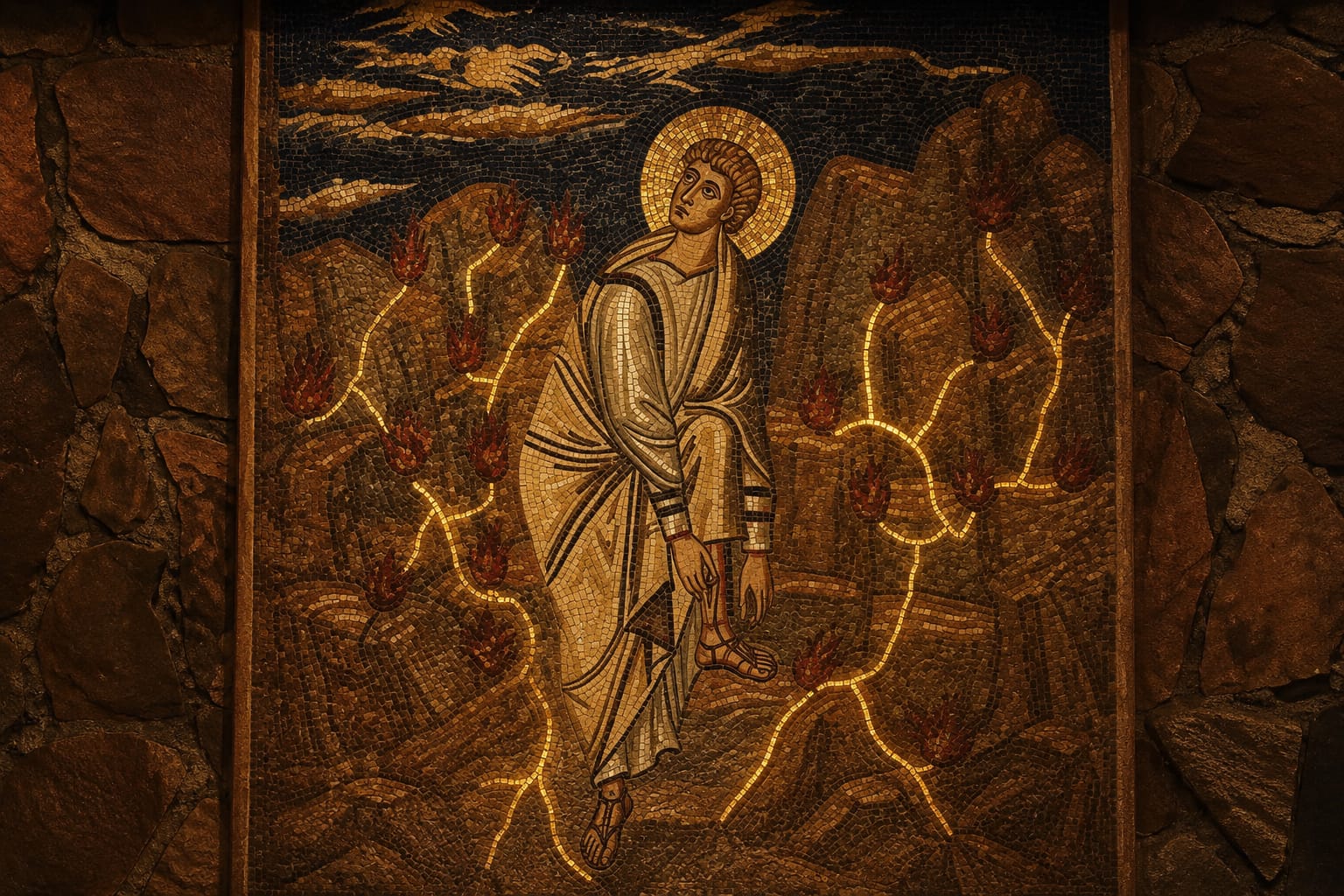
The screenplay moves from the Sacred Bush toward the mosque and then into the library and icons. That order turns the building into part of a larger inquiry about how sacred memory is held in space, text and image.
The camera’s task is observational. Stone, arches, tower and surrounding walls carry the argument, while narration supplies only the documented context needed to understand what the viewer sees.